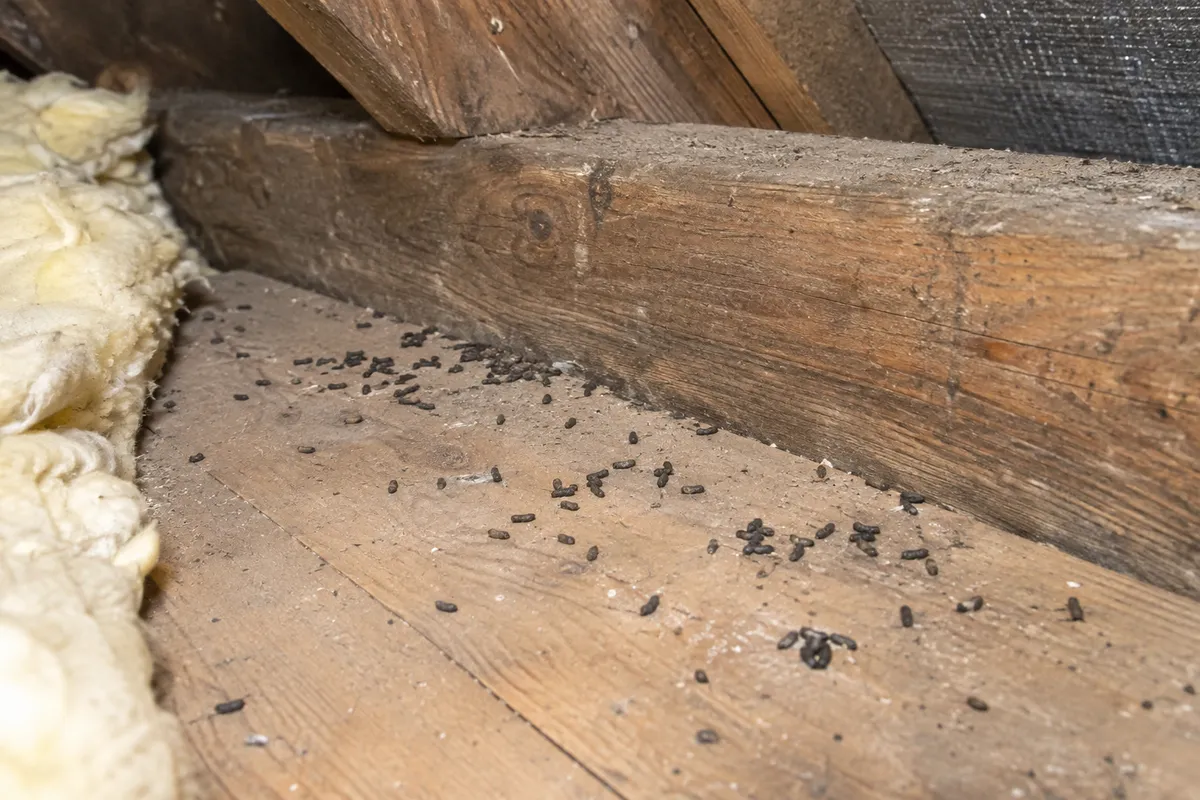
What is bat guano?
Guano is a name for bat droppings. Its presence can be relevant to a roost assessment, but a photograph of small dark pellets is not enough to confirm the source, age, or extent of an issue. Avoid disturbing material to inspect it more closely.
When you call, explain where the material is, whether you have seen bat activity, and whether the space has recently been disturbed. You do not need to collect a sample yourself.
Avoid creating dust
CDC guidance identifies disturbing material containing bat droppings as a potential exposure concern for the fungus that causes histoplasmosis. Large accumulations should be addressed by professionals specializing in hazardous-waste removal. This does not mean every dropping contains the fungus or that illness has occurred.
Leave suspected droppings undisturbed while arranging appropriate advice. Avoid dry sweeping or using a household vacuum. If you have health concerns after an exposure, contact a medical professional.
Ask exactly what the cleanup proposal includes
An exclusion proposal should not be assumed to include cleanup. Ask whether the specialist offers cleanup assessment, whether a separate company is needed, and what findings support the proposed work.
- Which areas and materials are affected?
- Is bat activity still present?
- What work is included and what is excluded?
- Is insulation removal actually needed for the observed conditions?
- How will access and affected materials be managed?
Coordinate the building and cleanup questions
The best next conversation addresses both the observed material and the suspected bat access. Ask how those parts of the situation relate before agreeing to a scope of work. A recommendation should reflect the property rather than a fixed package.
Call us about a bat concern in Grand Rapids and explain what you have noticed. Cleanup availability and any separate work must be confirmed directly with the specialist.
Further reading
CDC: histoplasmosis prevention ↗